
21.5mm low-iron toughened laminated glass
Choose thickness
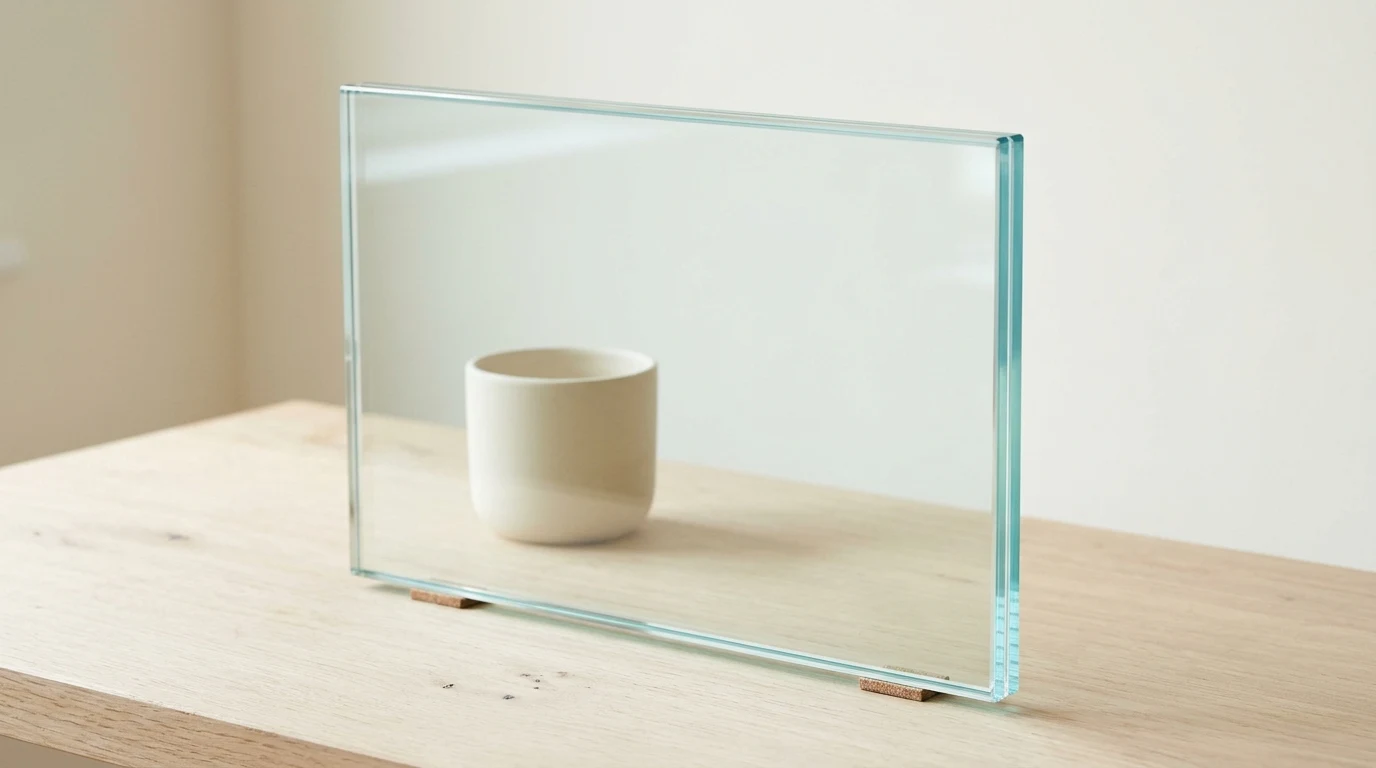
Cut to your finished sizes
Polished edge with small safety chamfer
Usually 8–13 working days to make, plus transport.
Urgent 5–6 working-day production is a separately priced request.
Plan your panels
No specification yet? Describe the project. Sizes and technical details can follow with the supplier.
Set the specification once. Enter finished glass sizes, add every size and quantity below, then send the whole set to your basket.
Raw-sheet formats and finished sizes →
Fixed product build-up: 10mm low-iron toughened glass + 1.52mm interlayer + 10mm low-iron toughened glass. Calculated overall thickness: 21.52mm. The product name identifies the nominal range option with 1.52mm interlayers; choosing 0.76mm changes the overall thickness, keeping the same glass plies. Hole checks use the individual panes; the thicker pane governs this baseline.
For a triple laminate, this choice applies to both interlayers. The calculated overall thickness excludes manufacturing tolerances.
The interlayer bonds the panes together. SGP is used in engineered structural applications; selecting it does not establish suitability or prove that a thinner laminate has equivalent strength. Performance depends on the complete construction, support, loading and conditions. Your supplier confirms the exact interlayer product, thickness, availability and complete system.
Your panel schedule
Finished glass sizes in millimetres. Each row uses the shared glass specification. Add its own processing below the size.
Finished size limits — 21.5mm low-iron toughened laminated glass. Minimum and maximum finished width and height: supplier to confirm for the chosen thickness, finish, shape and processing. Enter the sizes you need for a quotation.
Online entry range: 1–20,000mm for each dimension; this is a form limit, not a manufacturing range. Unknown sizes can be left blank in Simple mode. Raw-sheet formats do not set finished-panel limits.
Panel 1: holes, cut-outs and extra processing Optional
These options apply only to this row. Duplicate the row to copy its processing. Hole centres are measured from the top-left corner: X goes right and Y goes down.
The supplier checks its own hole limits and final drawing. Socket cut-outs may have a finished internal radius around 10–13mm, depending on the factory.
Transport, fitting, processing fees, stock, tolerances and suitability are confirmed in the supplier’s quote. Selecting a thickness does not approve an application.
Description and application images
21.5mm low-iron toughened laminated glass cut to size, made with low-iron glass in every toughened pane. Reduced iron content gives a less green appearance than standard clear glass. Choose your sizes, processing and EVA, PVB or SGP interlayer preference; your supplier confirms the exact interlayer, availability and suitability for the complete installation.
What makes low-iron glass different?
Ordinary clear glass contains iron that contributes to its greenish tint. The difference is often easiest to see along a polished edge or in a thicker section. Low-iron glass has a reduced tint, rather than a promise of completely invisible or colourless edges.
This 21.5mm nominal laminate uses 10mm low-iron toughened glass + 10mm low-iron toughened glass with 1.52mm interlayers as the starting option. You can choose 0.76mm for each interlayer in the configurator, which recalculates the overall thickness. The same fixed glass-ply and interlayer thicknesses are offered in our standard clear laminated range. Low iron changes appearance; it does not establish greater strength or suitability for a structural system.
Choose your interlayer
EVA, PVB and SGP / SentryGlas ionoplast can be requested, or choose advice from your supplier. Availability, edge exposure, fixing method and intended use determine the appropriate complete construction. Your preference is retained with each panel, together with the selected 0.76mm or 1.52mm interlayer thickness; the supplier confirms the exact interlayer product before manufacture.
Clarity, toughening and Low-E are different choices
“Low iron” describes the glass composition and appearance. “Toughened”, also called tempered, describes its processing. Low-E is a separate coating specification; it is not another name for low-iron glass. Your supplier confirms the exact product and any coatings needed.
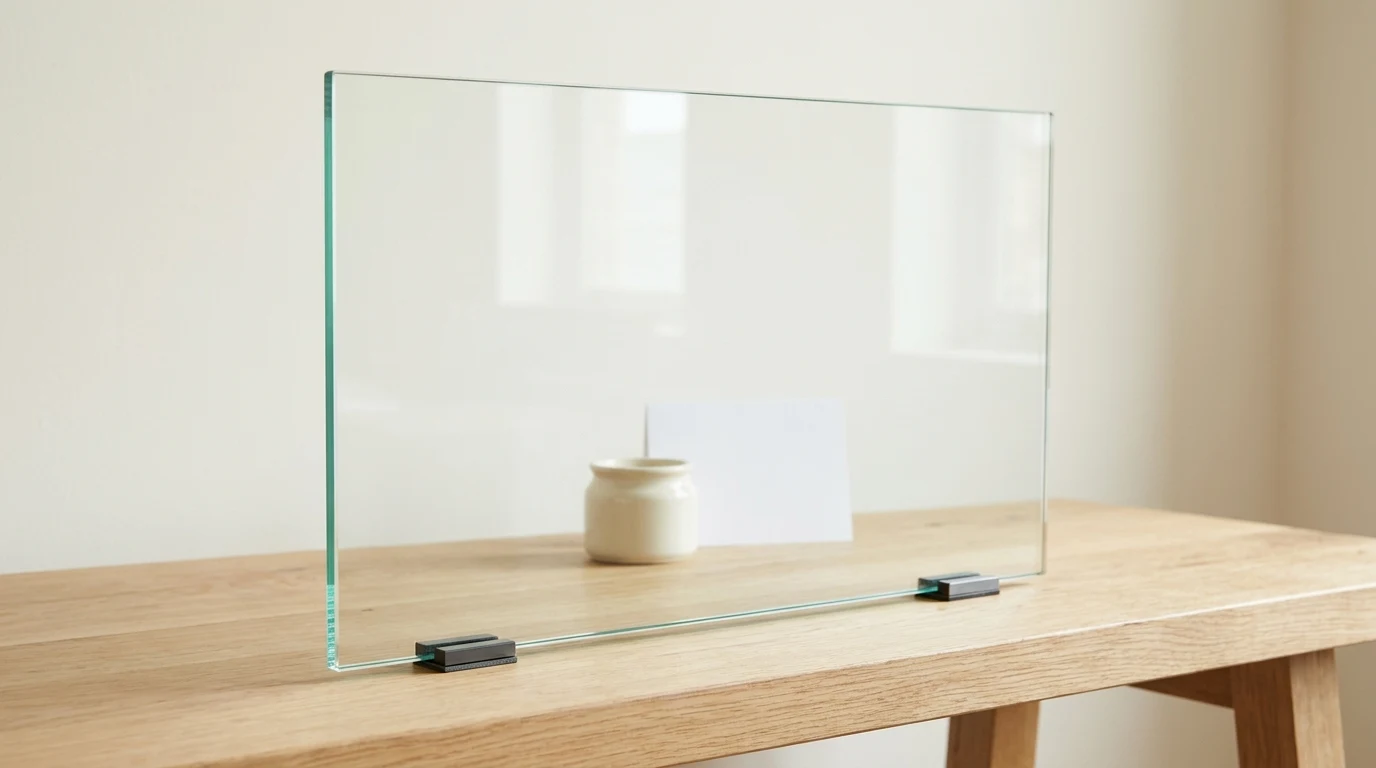
Standard clear glass
More visible green tint, especially through the edge.
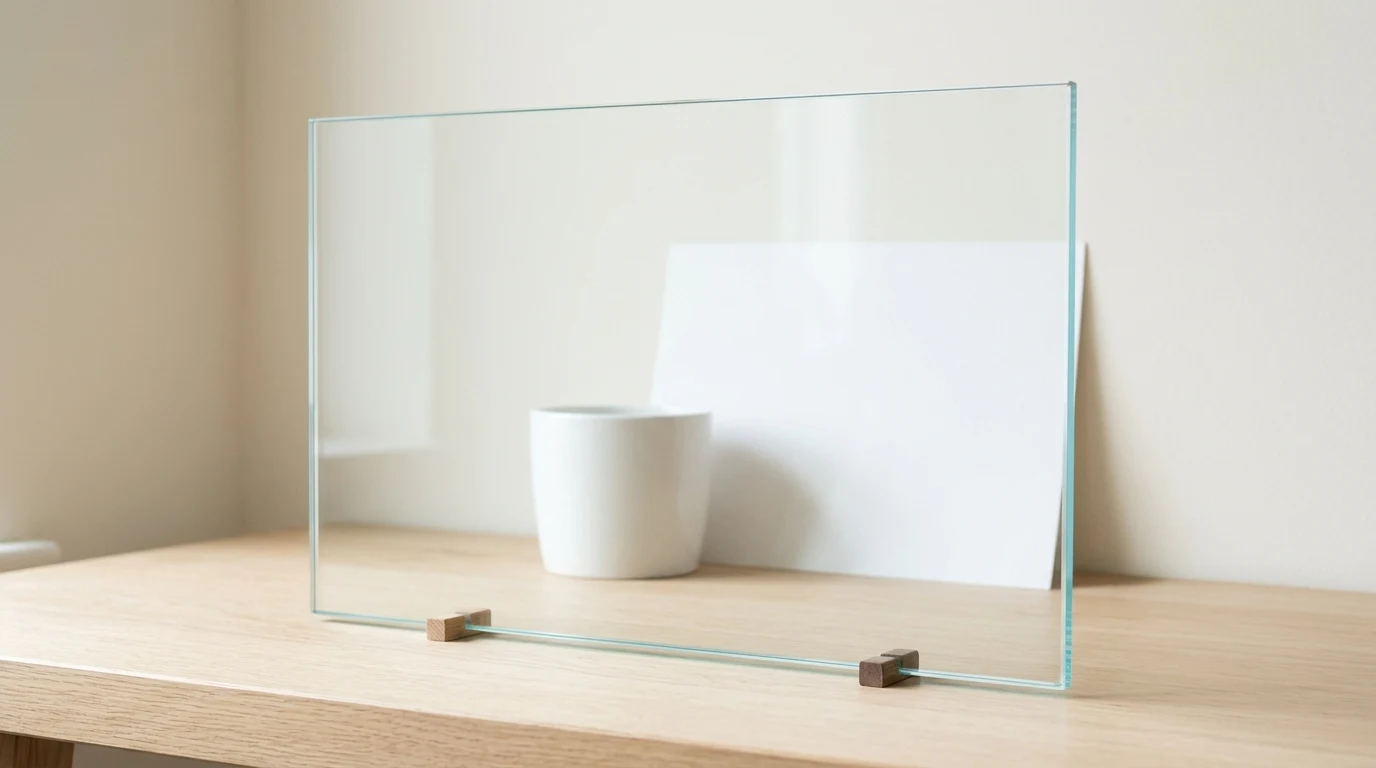
Low-iron glass
Reduced green tint and a more neutral appearance.
Manufacturer reading: Pilkington Optiwhite™ · Saint-Gobain DIAMANT®. These explain low-iron glass generally; the brand supplied is confirmed in your quotation.
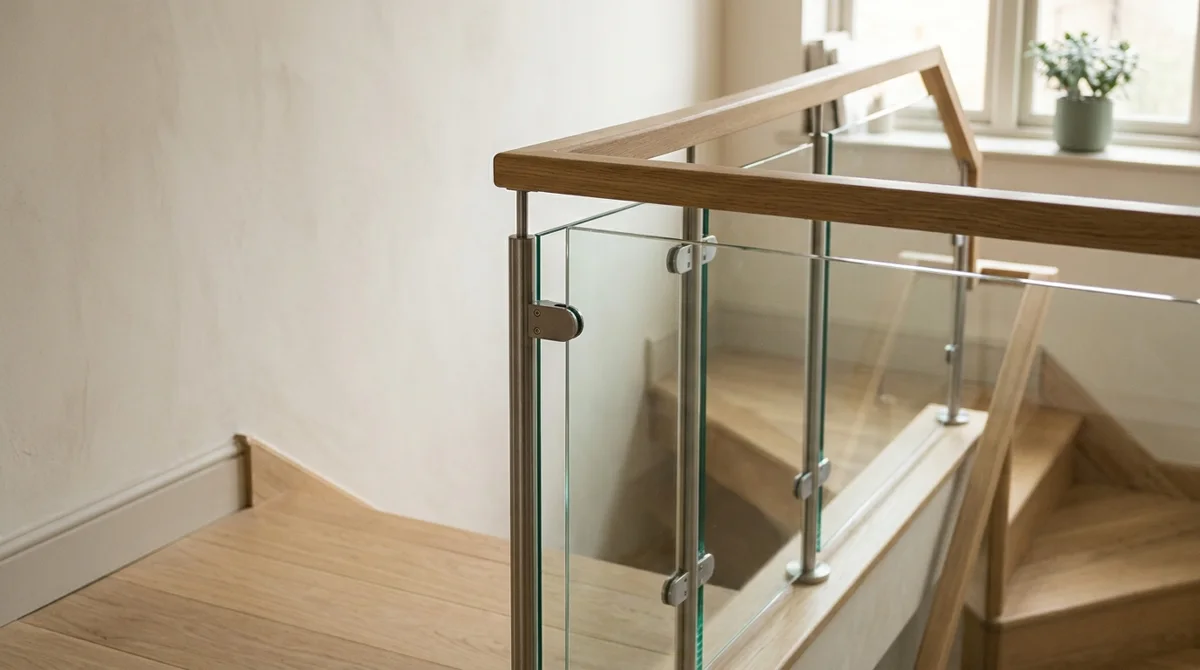
Suitable uses and specification limits
Discuss laminated glazing, guarding or other projects with the supplier. Provide the support system, panel dimensions, loads, fixing details and the intended location.
The whole installation needs a confirmed specification. A nominal thickness, interlayer preference or photograph does not approve guarding, overhead or walk-on use.
Available shapes and glass options
Plan finished panel shapes in the configurator. These products use the listed toughened glass plies; choose 0.76mm or 1.52mm interlayers and EVA, PVB, SGP or supplier advice. The displayed overall thickness is calculated from that build-up.
Current product: 21.5mm low-iron toughened laminated glass · 21.5mm. Keep the glass type, treatment and thickness with every panel.
Choose options in the planner →Edge finishes and fabrication choices
Request polished edges with a small safety chamfer, arrissed edges or a separately quoted decorative bevel. Choose dubbed corners, a 2mm radius or a custom radius. Holes, cut-outs, waterjet work, painting and sandblasting are requests for supplier review.
Include the face, orientation and drawing reference for each panel. The quotation must confirm the processing, tolerances and charges before manufacture.
Measuring instructions
- Record finished glass width and height in millimetres, with a quantity for every different panel. Identify which face you are viewing.
- For fitted panels, measure the opening in several places and record those measurements separately. Agree fitting clearances with your supplier; do not apply an assumed deduction.
- Dimension holes from the same reference edges, stating their diameters, cut-outs, corner radii and any notches. Give custom outlines a drawing or template reference.
Not sure of the finished size? Use a simple enquiry and request measuring or fitting advice. A photograph alone is not a manufacturing drawing.
Typical raw stock-sheet formats
Primary manufacturers make raw sheet glass. Fabricators and processors cut, treat and assemble it for individual orders. Supply may pass through distributors; direct-sales arrangements vary.
Official manufacturer information: Pilkington, Fuyao Glass, AGC Group, Guardian Glass, Saint-Gobain. These are non-exhaustive industry examples, not preferred suppliers. Product ranges and supply arrangements vary.
These are typical formats for raw glass before cutting and processing. Availability depends on your supplier’s raw-glass source and the exact product, finish and thickness.
| Format | Raw sheet size |
|---|---|
| Machine size (standard) | 3210 × 2250 mm or 3210 × 2550 mm |
| Split size | 3210 × 2000 mm Custom split layouts may be derived from a 3210 mm ribbon; confirm the layout with your supplier. |
| Jumbo size (PLF) | 3210 × 6000 mm |
Raw sheet size is not a guaranteed orderable finished-panel size. Cutting allowances, machinery capacity and orientation, processing and handling can restrict the finished dimensions. Keep the product’s own width × height pairs and safety limits.
These formats do not establish availability for mirrors, laminates, insulated or heritage units, patterned glass, fire-rated glass or other specialist products. Their product-specific sizes and restrictions still apply.
Compare the quoted price alongside the confirmed specification, relevant quality documentation, traceable provenance and consistency. Agree shipping and lead times, handling and replacement arrangements, regardless of where the glass is made.
Enter the finished glass sizes you need in the planner. Your supplier confirms the raw material and what can be cut, processed, handled and supplied for that specification.
Drawing and photograph upload
Include an overall view, close-ups of supports or frames, and a drawing with panel references, dimensions and orientation.
PDF, JPG, PNG or WebP · up to 6 files per product · 5MB per file. Files stay in this browser on this device and are available with this product in your basket. Supply them separately to your supplier when requested. Keep your originals; clearing browser data removes these copies.
Updating local files…
Get a price or supplier quote
Configure your panels or describe what you need. Your supplier confirms glass, processing, VAT, delivery and any measuring or fitting charges in the quotation.
Build your basket to request a supplier quotation. Adding a request is not an order.
Delivery, collection and fitting information
Delivery
Usually 8–13 working days to make, plus transport.
Give your actual project postcode and access details. Agree packaging, unloading, handling equipment and the delivery date with your supplier.
Collection
Request factory collection where available. Wait for readiness confirmation and agree a time, loading arrangements and suitable transport before travelling.
Measuring and fitting
Ask for supply only, glass with fittings, or supply and installation. Measuring, removal of existing glass, fixings and fitting need an agreed scope and price.
FAQs and care advice
Can I choose a thickness from an application picture?
The picture shows a use context. The supplier needs the finished dimensions, support, loading and exact installation to confirm a construction.
Can I request a quote before I know all the sizes?
Yes. Start with the intended use and what you already know. Ask for help measuring or specifying, then approve the final dimensions and drawing with the supplier.
Are shaping, processing and fitting included in the price?
The supplier quotation confirms each included item and any separate charge. Planner choices are requests for review; they do not establish a final price.
How should I care for this glass?
Ask for cleaning instructions for the supplied surface. Use a clean soft cloth and a cleaner approved for that glass; avoid abrasive pads and scraping. Check any coatings, painted surfaces or exposed laminate edges before applying a cleaner.